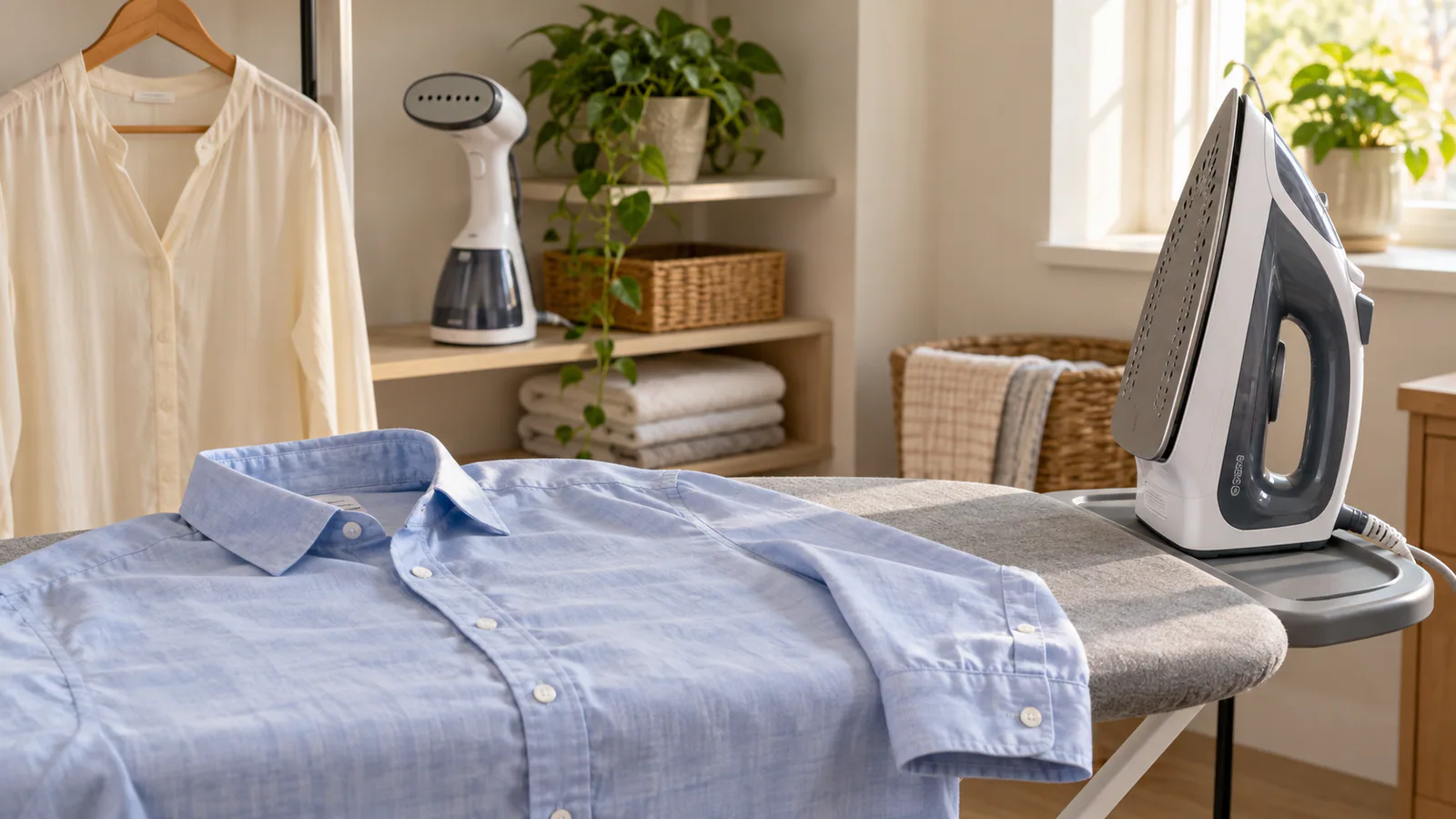
Decide what a finished shirt should look like
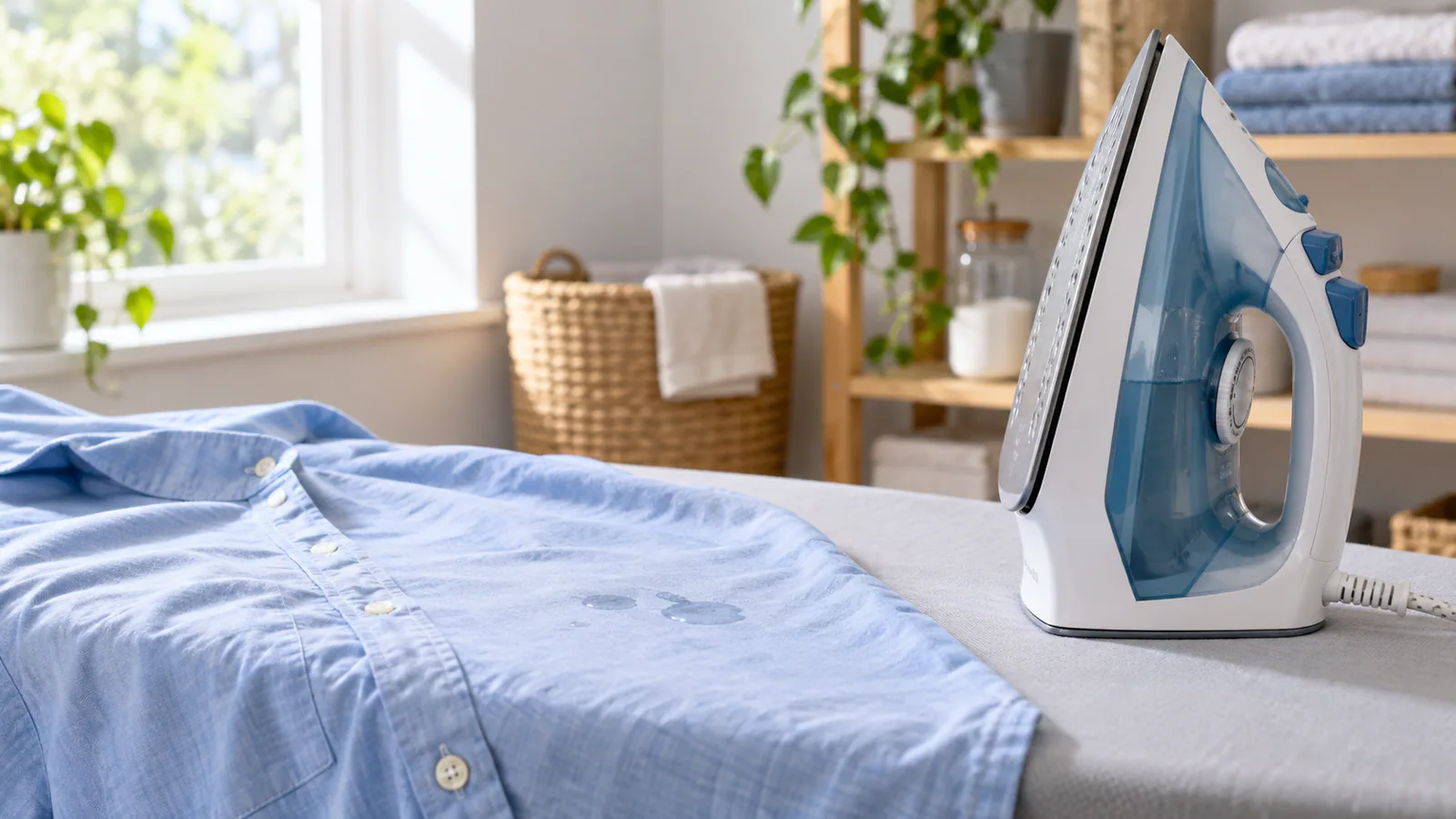
If you want a softly draped blouse to look tidier before leaving home, a steamer may be enough. If your work or school shirts need a flat collar, neat cuffs and a pressed finish, an iron remains the more dependable starting point. Check the garment-care label before choosing either method.
Philips Home's garment-care FAQ makes this distinction particularly for thick cotton and linen shirts. It describes steamers as useful for lighter fabrics, awkward designs and touch-ups. That is manufacturer guidance, not a promise that every steamer fails on cotton or every iron suits every garment.
The disagreement is often about the expected finish
In a Reddit laundry discussion, the original poster struggled with a cotton garment and considered returning a handheld steamer. Replies included satisfied users of upright steamers, people who still iron shirts, and someone distinguishing wrinkle removal from a pressed appearance. The thread does not establish a winning brand or a failure rate.
A Russian-language discussion about school blouses and shirts, dated 18 September 2026, starts with the tiring routine of ironing school clothes. Replies favour different tools, including a handheld steamer and a steam-generator iron. Those are different appliances; a positive report about one does not validate the other.
The counterexample is important. In Tefal's Russian owner reviews, one reviewer says the Pure Pop handles knitwear better than cotton shirts, while others say they rarely reach for an iron. These self-reports support choosing for your wardrobe and expectations. They do not support saying that steamers are useless, or that they always replace ironing.
Check the functions behind the product name
Some steamers offer more than vertical steaming. The Philips GC362/86 leaflet describes horizontal use and a heated plate that helps press fabric, including difficult areas such as collars and cuffs. This is a model-specific capability, not permission to turn any steamer sideways.
A steam iron can also offer vertical steam. For example, the published COSONIC CSI-7202 configuration lists adjustable steam and temperature, a ceramic soleplate and vertical steam. Those are relevant functions when comparing an iron for pressing with occasional hanging-garment care. Follow the exact model's instructions and the garment label; the feature list alone does not prove a particular finish or time saving.
Buy for the clothes you actually wear
Start with the clothes that cause the most work. For woven shirts that you want crisp, prioritise an iron and a suitable ironing surface. For light garments and quick touch-ups where a relaxed finish is acceptable, compare steamers. If you already own an iron, a steamer may complement it without replacing it.
In product listings, check approved operating positions and fabric guidance. In reviews, search the exact model with terms such as cotton shirt, collar, cuffs or linen, rather than relying on a general star rating. A demonstration on a thin T-shirt does not answer how a thick school shirt will look.
If the evidence shows only a relaxed finish and you require a pressed one, choose a different tool. Do not compensate with unsupported operating positions or repeated heat on a garment whose label rules it out. Keep hands clear of steam and never steam clothes while wearing them.