Thesis: An approved sample controls mass production only when it is tied to a named revision and the supplier cannot change controlled details without a recorded buyer decision.
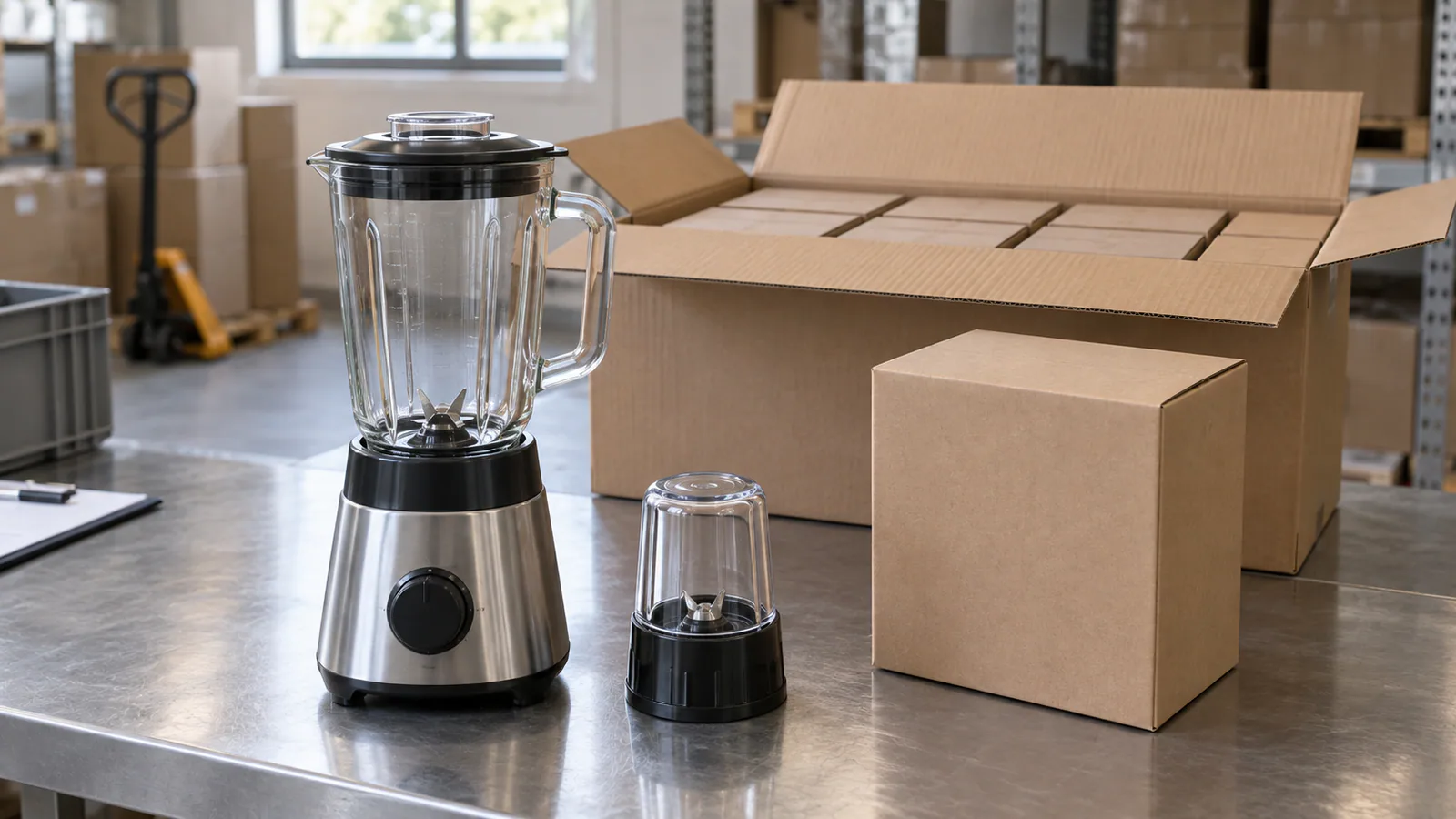
That sentence is the entire point of this guide. A beautiful “golden sample” on a shelf does not stop a different switch, cord, coating, manual or carton from entering production. Identification and change control do.
What buyers were actually complaining about
We reviewed the posts, leading comments and counterexamples on 27 August 2026. Three different communities described the same narrow gap:
| Evidence observed | Data at review time | The useful signal |
|---|---|---|
| Reddit supplier-trust discussion | Post score 63; leading quality-drift comments scored 112 and 56 | Buyers described good samples or early batches followed by cheaper components, weaker QC or gradual specification drift |
| Xiaohongshu enterprise-purchase post | 45 likes and 20 comments; the buyer reported more than CNY 900 in return freight | The received bulk goods differed from the sample; a seven-like comment said the specialist making samples and the workers making the order may not produce the same result |
| Bilibili sample/report discussion | 4,922 views, 81 replies and 421 likes | The top comment, with 44 likes, feared that a good unit could be submitted while poorer units were sold; a packaging QC worker described selecting and testing units before submission |
None of these numbers is a defect rate. Reddit scores, likes, views and replies measure attention, not representativeness. The cases also span CNC, marketplace purchasing and packaging rather than only small appliances. Their value is that unrelated buyers and practitioners describe the same mechanism: the approved unit and routine production were not kept under one controlled identity.
One Reddit reply, scoring 11, reported the opposite experience: a Chinese supplier delivered completely reliable products after local fabricators had disappointed the buyer. That counterexample matters. The failure is not an inevitable property of a country or factory type; it is a risk that becomes visible when the order either has—or lacks—configuration and change control.
“Same as sample” is not a usable baseline
Imagine two identical-looking kettles on a desk. One uses the approved switch and cord; the other uses replacements that fit the same housing. A photograph may not reveal the difference. “Same appearance as sample” cannot decide whether the second kettle is acceptable.
ISO 10007:2017 describes configuration management through configuration identification, change control, status accounting and audit. Translated into a small-appliance purchase order, the buyer needs to answer four questions:
- What exactly was approved?
- Which details must remain unchanged?
- Who may approve a proposed difference?
- Which production records show the approved state was used?
If the order cannot answer those questions, the sample is evidence of a meeting, not control of a shipment.
Convert the sample into a production baseline
The baseline does not need to be a hundred-page manual. It needs enough identity that a factory, buyer and inspector would reach the same comparison decision.
| Baseline field | Record this, not an adjective | Example of an unresolved statement |
|---|---|---|
| Product identity | Supplier model, buyer SKU, sample ID, revision and approval date | “Latest version” |
| Market variant | Destination, voltage, frequency, plug and language set | “European type” |
| Controlled components | Agreed maker/model, drawing or bounded performance/material specification | “Equivalent switch allowed” |
| Product evidence | Rating label, artwork, manual, accessory and packaging file versions | “Use final artwork later” |
| Test method | Setup, load, duration, instrument and expected result | “Function okay” |
| Visible limits | Approved colour/finish reference, inspection distance or measurable tolerance | “Premium finish” |
| Open deviations | Difference, owner, due date and whether a new sample is required | “Minor issues to fix” |
| Retained reference | Sealed duplicate or complete photo/measurement record held by each party | “Factory has the sample” |
For electrical appliances, do not turn the table into a compliance claim. IEC 60335-1 covers general safety and is used with the applicable product-specific Part 2. The relevant edition, market requirements and effect of a changed component must be assessed for the exact model by qualified parties.
The five-line change request that prevents an argument
Every proposed change to a controlled detail should answer five lines before affected production continues:
- Before / after: current part, material, process or file and the proposed replacement.
- Reason: shortage, discontinuation, corrective action, cost, capacity or another stated cause.
- Effect: evidence about safety, function, fit, appearance, target-market documents, price and lead time.
- Scope: affected component batches, finished-product lots and already completed quantity.
- Decision: named buyer approves, rejects or requires a new sample/test, with date and conditions.
“Equivalent,” “same quality” and “no effect” do not fill line three. They are conclusions. The change request must show why the conclusion is reasonable and who accepted the remaining risk.
Here is copy-ready wording for a commercial specification. It still needs legal and model-specific review:
No controlled component, material, construction, supplier, process, rating label, artwork, manual, accessory or packaging specification may be changed without a written change request and the buyer's recorded disposition before affected production is released.
The controlled list should be attached. Otherwise the word “controlled” has no boundary.
Worked example: the cheaper switch
Assume an importer orders 2,000 kettles at an illustrative ex-factory price of USD 12 each: USD 24,000 of goods before freight, duty, testing, rework or retailer costs. These are teaching numbers, not a minMAX or COSONIC quotation.
The approved sample uses switch S-17. During purchasing, S-17 becomes unavailable and the factory proposes S-22.
Weak path
The buyer's order says “same as approved sample.” A purchasing employee accepts S-22 as “equivalent” in a chat. The buyer does not receive its identity or comparison. Final inspection checks appearance and basic operation, but the report cannot say whether S-22 was authorized. When a problem appears, both sides argue about what “same” meant.
Controlled path
The baseline identifies S-17. The supplier's change request names S-22, records why S-17 is unavailable, compares the relevant characteristics, identifies the affected lot and states what evidence needs review. The buyer then chooses one of three dispositions:
- reject S-22 and hold affected production;
- approve S-22 under stated conditions; or
- require an updated sample and qualified review before deciding.
The factory records the decision against the component batch and production lot. A first-piece or early in-process check verifies that the released line matches that decision. Final inspection then checks the shipment against a known baseline instead of trying to reconstruct it.
If the check occurs when an illustrative 5% of the 2,000-unit order has been assembled, the immediate work-in-process question concerns 100 units. If the difference is found after completion, it concerns 2,000. Five percent is not an ISO rule; it only demonstrates why the verification point must occur while correction is still possible.
Inspection verifies the rule; it does not replace it
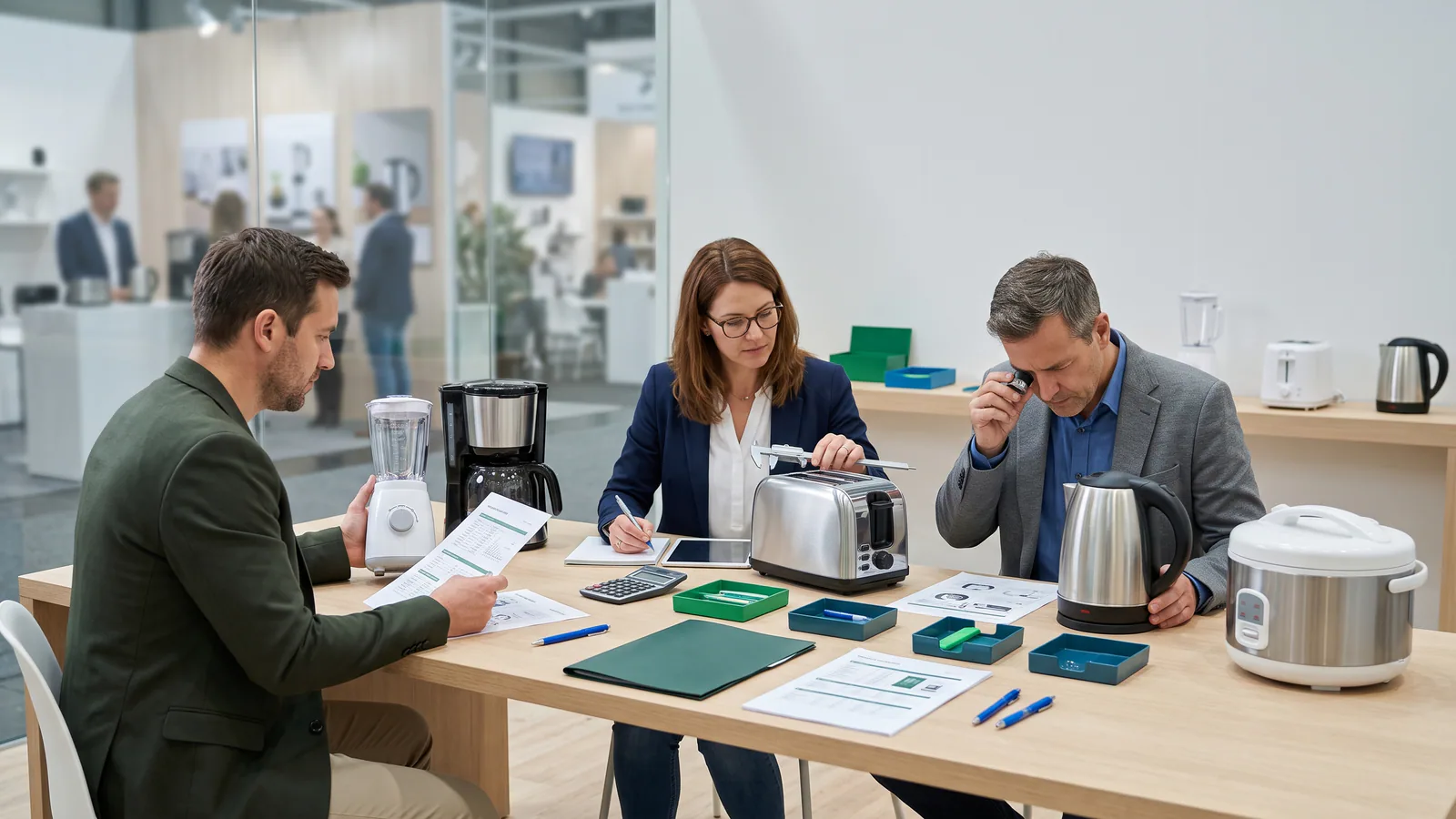
In a manufacturing discussion about in-process versus final inspection, practitioners described first-piece and in-process checks as ways to catch problems at the source. They also warned that a business cannot “inspect quality into” a finished product.
For this article's narrow problem, inspection has one job: confirm that production still matches the approved configuration and recorded changes.
- First piece: Is the normal line building the released configuration?
- In process: Are controlled components and settings still tied to the same lot?
- Before shipment: Does the inspected lot match the current baseline and change record?
Sampling level, AQL and full inspection-plan design are separate decisions. Copying a common AQL value cannot repair an unidentified sample or an unrecorded substitution.
Five questions that expose whether the sample can control production
Send these before approving the sample:
- What sample ID and revision will the purchase order reference?
- Which components, materials, labels and files may not change without written approval?
- Show me the change-request form and name who can stop affected production.
- How will the component batch and approved decision link to the finished-product lot?
- At which early production point will you verify the line against the released baseline?
A supplier does not need identical paperwork to use this method. It does need unambiguous answers. If the reply is only “do not worry, bulk will be the same,” the buyer still has a trust statement rather than a control.
Applying this to a minMAX or COSONIC request
Use the RFQ form to identify the exact model, destination, quantity and private-label scope. Then ask which sample identity, product records, controlled details and production checkpoints are available for that order.
Availability, samples, change-control scope, inspection terms and target-market evidence require confirmation by model and order. This article does not claim a universal component list, certification status, inspection programme, MOQ, remedy or lead time for minMAX or COSONIC products.
Evidence limits
Community posts and comments identify buyer pain and possible failure mechanisms; they do not establish industry prevalence or prove anything about an unrelated supplier. Engagement figures above are snapshots from 27 August 2026 and can change.
ISO 10007 supplies the configuration-management logic, while IEC 60335-1 shows why appliance changes can have model-specific safety implications. Neither source turns this commercial guide into laboratory, legal or regulatory advice.
Sources and evidence
- ISO 10007:2017 — official configuration-management framework covering identification, change control, status accounting and audit.
- IEC 60335-1:2020+AMD1:2025 CSV — official general household-appliance safety standard, used with the applicable Part 2.
- Reddit supplier-trust discussion — high-engagement quality-drift comments and a reliable-supplier counterexample.
- Xiaohongshu enterprise-purchase case — one sample/bulk mismatch, return-freight dispute and comments about sample-making versus line output.
- Bilibili sample/report discussion — video and practitioner comments about selected submitted units versus later goods.
- Reddit in-process versus final-inspection discussion — practitioner experience on early verification and containment.
Buyer questions
Is a signed golden sample enough?
No. It needs a sample ID, revision, written baseline, controlled-change rule and records that connect the released configuration to the production lot.
Can a factory use an equivalent component?
Only within the agreed boundary. The proposed difference, evidence, affected lots and buyer disposition should be recorded before affected production is released.
Does final inspection solve an unapproved substitution?
Not reliably. An inspector cannot compare an internal change that the baseline never identified. Define the controlled item first, then verify it at an appropriate production point.
What should trigger a new sample?
The buyer's written rule should identify changes that reopen approval. Electrical, thermal, structural, food-contact or other safety- and performance-relevant changes generally require qualified, model-specific review rather than an informal equivalence claim.