Reverse helps you back out of a blockage
The Weston 33-0201-W manual describes reverse as a brief operation to help clear a jam. It requires the motor to stop completely before changing direction. If the jam remains, the instructions move on to switching off, disconnecting and cleaning the grinding head.
That makes reverse a convenience worth comparing, rather than permission to keep forcing meat through. Controls and permitted run times differ: use the instructions for your exact machine, not another brand's timing. Never reach into the feed tube or remove the grinding head while the appliance is connected to power.
A reverse button does not promise fewer stoppages
In a home user's discussion about sinew, the owner of a LEM Big Bite #8 describes repeated blockages and asks whether a larger model would help. Replies point to preparation, blade condition and assembly, with conflicting advice. The thread establishes a frustrating experience, not a diagnosis or proof that buying a larger motor fixes it.
There is also a practical limit to what reverse can move. In iXBT's Vitek VT-3619 test, it did not release stuck horseradish. That is a result for one machine and one ingredient, not a failure rate for meat grinders. It does show why a reverse feature alone cannot promise that every blockage clears without disassembly.
For shoppers comparing controls, the published COSONIC CSG-7207 configuration includes ON / OFF / Reverse. This is a relevant feature to shortlist; follow the supplied model's operating instructions. The feature listing is not an independent comparison of clogging or grinding performance.
You may rarely need reverse with suitable meat
The counterexample matters. Gastronom's grinder comparison used beef with the largest sinews removed and reported no need for reverse. One tested machine lacked the function. This does not prove reverse is useless; it shows that its absence alone does not tell you whether a machine will grind your usual prepared meat successfully.
Choose for your meals and your cleanup
Start with the meat and batch you regularly prepare. Search the exact model name with terms such as “sinew”, “clogging” and “cleaning”. Prefer reviews that identify the meat, preparation and outcome over a demonstration that only shows the motor running.
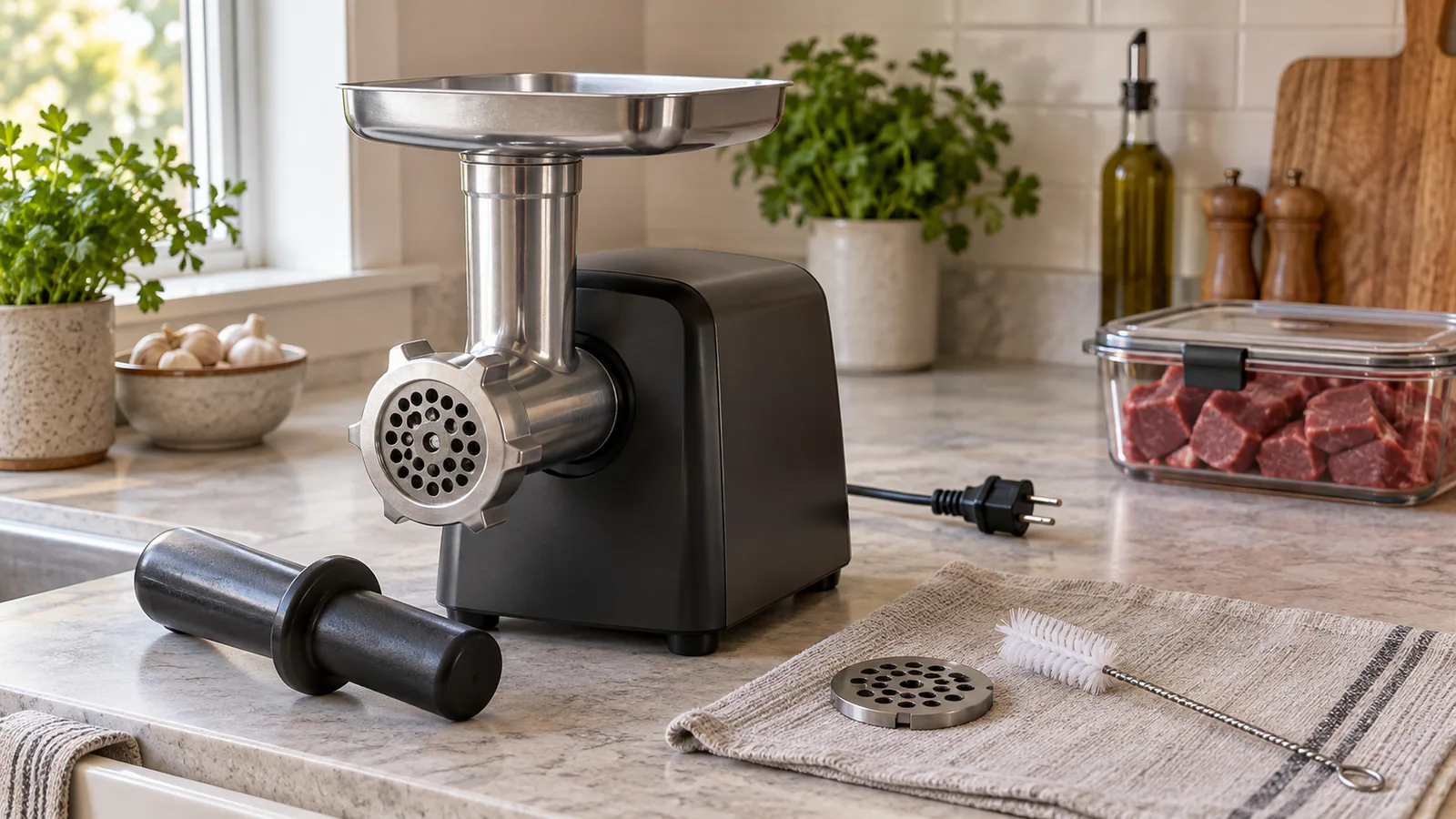
Next, check the manual and product photos for how the grinding head, plate and blade come apart for cleaning. If you would struggle with that routine, a reverse button does not remove the problem. Compare the published operating limits with your intended batch before choosing.
Choose reverse as a useful extra when the rest of the grinder fits your routine. If your current machine repeatedly stops or will run only in reverse, stop using it and seek the manufacturer's support instead of treating reverse as a normal grinding mode.