Regular sugary soda may work as a one-ingredient slush. Diet or zero-sugar soda usually will not freeze and dispense correctly on its own; it needs the approved recipe for the exact machine.
The reason is simple: dissolved sugar helps lower the freezing point and keeps a drink soft enough to move through the machine. Remove the sugar and the result may stay liquid, become hard ice or turn into a chunky texture that will not dispense.
This does not mean zero-sugar slush is impossible. It means “pour the bottle in and press Start” is not the same recipe for regular and diet soda.
What can normally go in directly?
SharkNinja's official one-ingredient soda guide lists regular cola, orange, lemon-lime, cream soda, root beer, ginger ale and grape soda as examples for its covered SLUSHi model. The same guide states that diet soda or soda made with sugar alternatives will not work in that unit.
Its current product page separately promotes sugar-free recipes by adding recommended substitutes. That distinction matters: the machine can support a sugar-free result, but plain zero-sugar soda is not automatically a complete recipe.
| Drink | Can it usually be poured in unchanged? | What to check |
|---|---|---|
| Regular sugary soda | Often yes, if the manual lists it | Use the normal slush preset and stay within fill limits |
| Diet or zero-sugar soda | Usually no | Use only the approved substitute and amount for your model |
| Juice | Depends on natural sugar and pulp | Use the juice/frozen-juice guidance; strain only if instructed |
| Milkshake or dairy coffee | Recipe-dependent | Use the milk or coffee preset and follow fat, sugar and cleaning guidance |
| Cocktail | Recipe-dependent | Alcohol can resist freezing; follow the approved alcohol range and preset |
Why “it has a milkshake button” is not enough
Drink menus tell you what category the machine is designed to handle. They do not guarantee that every bottle or homemade mix in that category will work unchanged.
One Reddit owner reported that straight cola worked, while wine, a milkshake and a boozy milkshake failed even though the recipes seemed to contain enough sugar or alcohol. Another user described a zero-sugar recipe producing a chunky, hard-to-dispense texture. These are individual cases, not proof of a universal fault. They show why recipe balance matters more than the menu name.
The most reliable order of authority is:
- the manual and recipe guide for your exact model;
- official support guidance for that model;
- repeatable recipes from experienced owners, treated as experiments rather than guarantees.
Do not copy a substitute amount from a different brand or machine without checking compatibility. Ingredients such as allulose are not equally available or regulated in every country, and some substitutes may not create the same freezing texture.
Choose a machine by the drinks you will actually make
If the household mostly wants cola or fruit soda at parties, a regular slush preset may cover the main job.
If the priority is low-sugar or zero-sugar drinks, check whether the manufacturer publishes specific recipes using ingredients you can buy locally. “Supports sugar-free recipes” is much more useful when the guide gives exact amounts and troubleshooting.
If the priority is milkshakes, frozen coffee or cocktails, look for dedicated menus and model-specific recipes. Also check whether the cleaning instructions change after dairy or coffee drinks.
A better way to try a new recipe
Start with an approved recipe at a small safe batch within the machine's fill limits. Chill ingredients first if the manual recommends it. Do not change the sweetener, alcohol and liquid amount at the same time; if the texture fails, you will not know which change caused it.
If the drink remains liquid, freezes too hard or will not dispense, stop and follow the model's troubleshooting guide. Do not force the auger or add ingredients while the machine is running unless the instructions explicitly allow it.
The useful question is not “can this machine make slush?” It is “does the maker publish a working recipe for the drink I want most?”
Where minMAX LC-2502A-2 fits
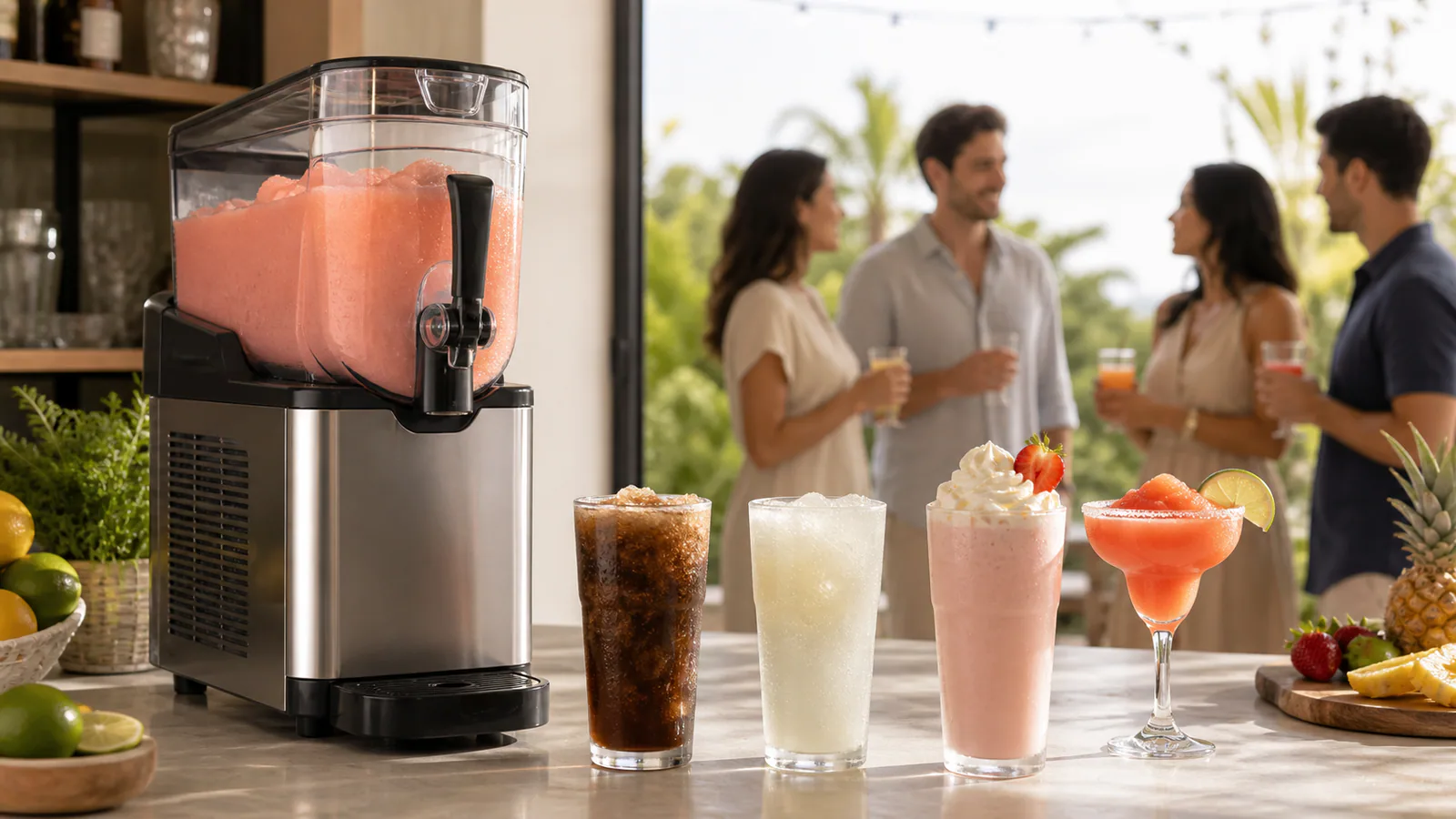
The current minMAX LC-2502A-2 record lists five menus—slush, milkshake, frozen juice, alcohol and coffee—plus a 2L maximum capacity, automatic cleaning and an indicated 15–45 minute preparation range. That makes it a relevant candidate for households that want more than one frozen-drink style.
Those published menus do not prove that plain diet soda can be poured in directly, and Ninja's recipe rule cannot be transferred to minMAX. Before purchase, ask for the recipe guide supplied with the local LC-2502A-2 version and confirm the approved ingredients for the drinks you care about, along with voltage, plug, fill limits and included parts.
Sources and evidence
- SharkNinja one-ingredient soda slush guide — official regular-soda recipe and direct warning about diet soda for the covered machine.
- Ninja SLUSHi product page — official statement that sugar-free recipes use recommended substitutes.
- CHOICE: Ninja Slushi review — independent drink, texture and cleaning observations for one model.
- Reddit owner recipe list — high-engagement practical experimentation; anecdotal and model-specific.
- Reddit pre-purchase questions — direct customer questions about soda, sugar and cleaning.
- Reddit worked/failed drink report and zero-sugar texture complaint — individual counterexamples, not failure-rate evidence.
Common questions
Can Coke Zero or Diet Coke go straight into a slush machine?
Usually not in machines that depend on dissolved sugar for texture. Use the exact sugar-free recipe and approved substitute for your model.
Can I use ordinary cola directly?
Often yes when the manufacturer lists regular soda as a one-ingredient recipe. Stay within the fill limits and use the recommended preset.
Can I make milkshakes and frozen coffee?
Only when the machine and recipe guide support them. Use the dedicated preset if available and follow the after-use cleaning instructions for dairy or coffee residue.
Can I make alcoholic slush?
Yes on machines with approved cocktail recipes, but too much alcohol can prevent freezing. Follow the exact model's alcohol range and recipe rather than guessing from a standard drink.