HomeInsightsHow to Build a Quality Control Plan for Small Appliance Orders

Buying guides

How to Build a Quality Control Plan for Small Appliance Orders

Quality control should define what is checked, when, by whom, against which limit and what happens after a failure.

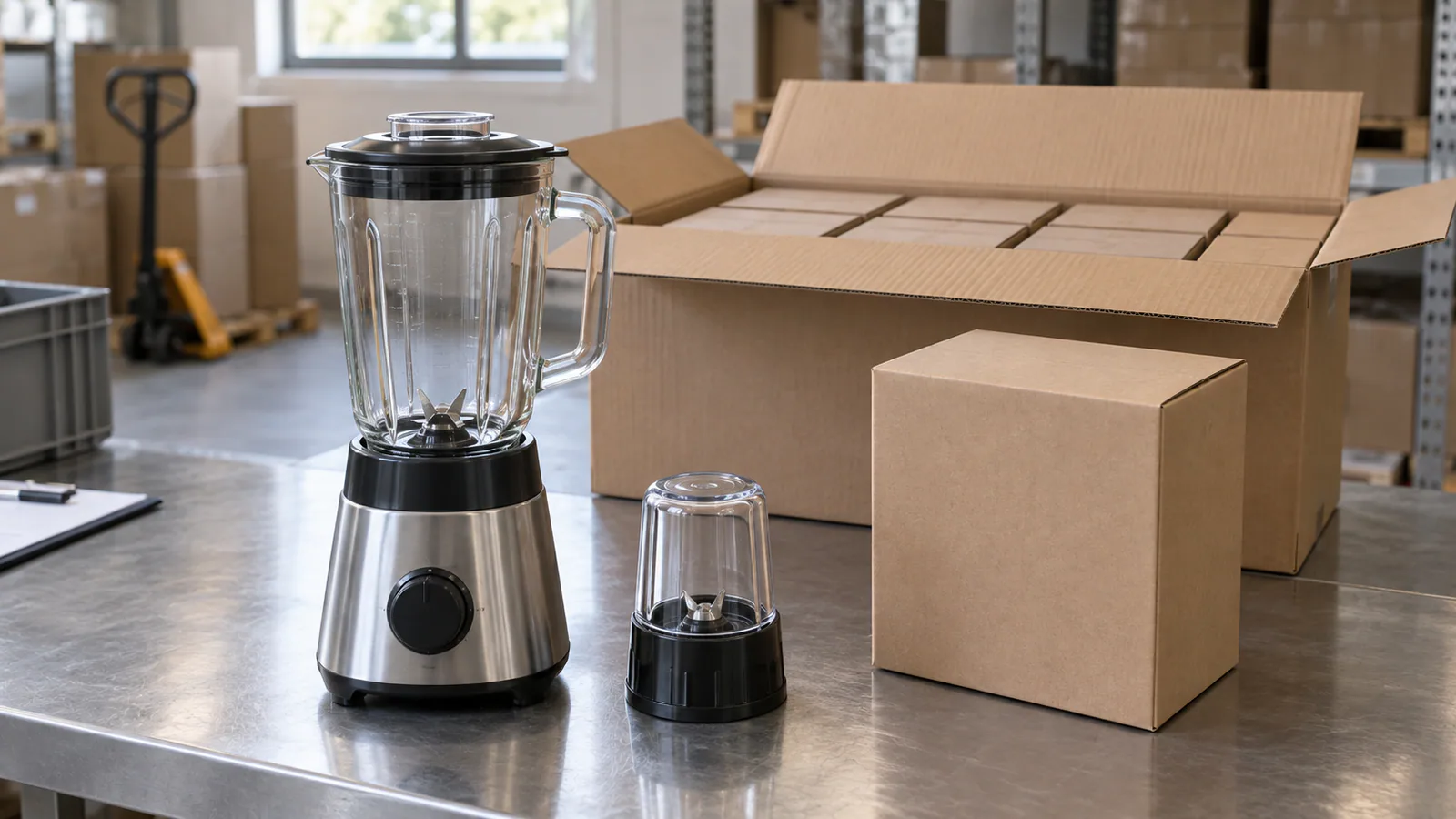
Buyer reviewing quality control plan for a small appliance order
A structured review helps buyers confirm quality control plan before an order.
Direct answer

A practical quality plan converts the approved specification into checks for incoming materials, production stages, final function, workmanship, packaging and release authority.

Turn product requirements into control points

A quality plan defines what is checked, where, how often, against which limit and by whom. It should prevent and detect model-specific risks rather than add a generic final checklist.

Inspection stages should reflect failure cost and detectability. Critical characteristics may need process controls or complete checks, while final acceptance sampling has a different purpose. Any sampling scheme needs a defined lot, defect classes and reaction plan.

The most common failure is using a generic final inspection checklist after defects have already been built into the lot. Prevent it by separating facts already verified from proposals that still depend on the model, quantity, market or order. Keep the destination, electrical configuration and sales channel visible throughout the review; changing any of them can invalidate an earlier conclusion.

The records behind a release decision

The working file should cover critical-to-quality characteristics, incoming inspection, in-process checks, functional testing, defect classification, lot release. Each record needs a version, owner and relationship to the offered model. If a file describes a component, prototype or related model, label that limitation rather than silently treating it as final-product evidence.

RecordEvidence to examineDecision signal
IncomingSafety-sensitive and variable materialsSupplier record plus receiving check
In-processAssembly torque, wiring or seals as applicableWorkstation record
FunctionalOperating modes and abnormal signsDefined method and result
WorkmanshipVisible surfaces and fitZone-specific defect standard
PackingAccessories, labels and protectionPacked-unit audit

Build controls from incoming parts to packed units

1. Translate requirements into checks

Every critical specification needs a method, limit, frequency and record.

2. Place controls near risk

Check incoming parts and early assembly where later detection would be costly.

3. Define defect classes

Critical, major and minor categories need product-specific examples and escalation.

4. Choose sampling deliberately

Define lot, scheme and acceptance criteria; sampling is not complete inspection.

5. Control reaction and release

State containment, rework, reinspection and who can authorize shipment.

Quality claims that need a defined method

For control points, defect rules and lot release, ask how each claim was produced and which model it describes. Descriptors such as standard, compliant, durable, quick or supported are conclusions until a method, configuration and record support them. Conflicting documents should be reconciled by model, revision, date and responsible issuer.

The offer boundary for control points, defect rules and lot release belongs in writing: exclusions, buyer-supplied inputs and changes that reopen cost, timing or validation. Private-label artwork can alter roles even when the base appliance is unchanged, so the review should identify the responsible entity rather than infer it from appearance.

Model-specific QC checklist

  • Link checks to specification clauses
  • Name equipment and calibration needs
  • Use model-specific defect examples
  • Define the inspection lot
  • Separate process control from final sampling
  • Require containment after failures
  • Record rework and reinspection
  • Authorize release explicitly

Attach the approved specification, defect examples and release authority to the order’s quality file; keep rework and reinspection results with the original failure.

Example: catching switch alignment before packing

If a switch alignment problem is found only after final packing, inspection can detect it but at high rework cost. An in-process fixture or check at the assembly station may control the cause earlier. Quality planning should therefore prevent, monitor and verify—not only sort.

Aligning minMAX or COSONIC orders with an inspection plan

A minMAX or COSONIC buyer should provide any mandatory inspection points and ask what records can be supported for the selected model. Inspection access, sampling and remedies require agreement in the commercial documents.

For a minMAX or COSONIC order, share mandatory inspection points and ask sales to confirm feasible records and third-party access for that model.

Use defect data to improve the next lot

Inspection reports should code defects consistently enough to reveal patterns by model, component, workstation or batch. Review counts and severity together: one safety-critical event can matter more than many minor appearance observations. Photographs need a reference scale and the report should distinguish inspected, reworked and rejected quantities.

After containment, ask what process change prevents recurrence and how its effectiveness will be checked. A corrective action may involve supplier input control, fixture design, operator instructions, test equipment or packaging. Keep the result with the next order's quality plan. This turns inspection from a one-time gate into feedback, while preserving the important boundary that a sampled result describes the defined lot and method—not every future unit.

Sources and evidence

Quality-control planning questions

Does AQL mean an acceptable number of defects for customers?

It is a sampling-plan parameter, not a promise that defects are desirable or that every unit is inspected.

Should all characteristics use the same sampling level?

No. Risk, detectability and process capability can justify different controls.

What happens after a failed inspection?

Follow the agreed containment, root-cause, rework and reinspection process before release.

Can a golden sample replace specifications?

No. It supports visual and physical reference but cannot express every measurable or safety requirement.

Apply the framework

Build a model-specific appliance brief.

Share your target market, preferred categories, quantity and timing. Our team can confirm suitable minMAX and COSONIC options.

Website buyer assistantHow can we help?

Use the website directly for product questions, quotations, files or after-sales. WhatsApp is optional.

Your question will be added to the secure inquiry form.