A shallow portion can make a useful blender frustrating
A home cook in a Reddit discussion described soup splashing onto the kitchen and their arms. They were beginning to prefer a conventional blender because of the cleanup. The practical question was whether to change technique or replace the appliance.
Several replies suggested a deeper container and keeping the blending head immersed. One person still reported some splashing despite using those precautions. That disagreement matters: the container is a sensible first check, not proof that every problem is the user's fault.
Match the container to the portion you actually make
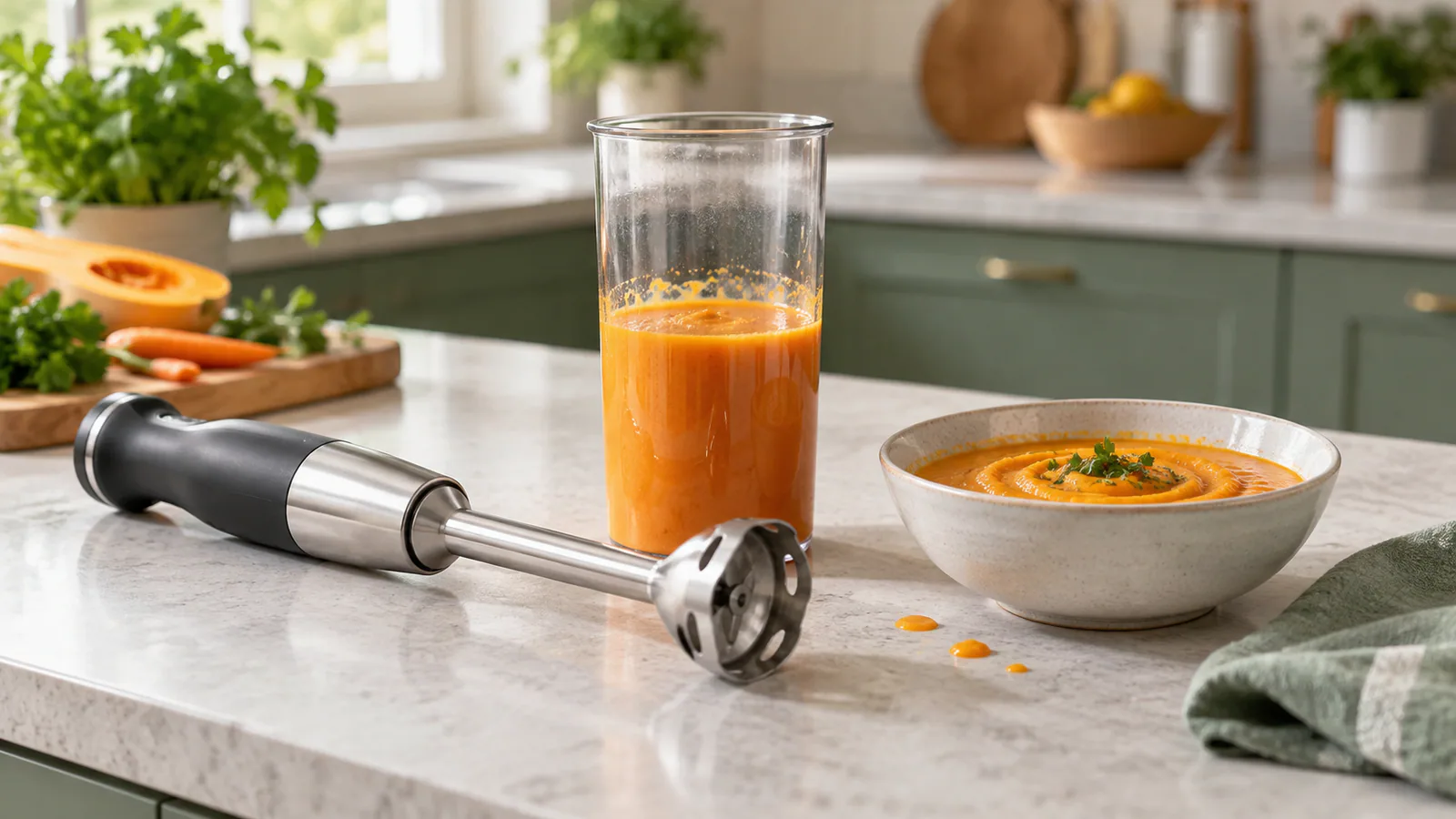
Look at the level of your usual portion before switching on. If it barely covers the bottom of a broad pan, the blade guard can sit above the mixture. A narrower, taller blending container can give that same portion more depth. This is a practical inference from the immersion guidance, not a measured claim that one container shape always performs better.
A Russian-language M.Video review of the Braun MQ9185XLI gives a useful shopping detail: the owner says the attachment fits the supplied beaker and does not splash sideways in that setup. The comment was posted on 14 April 2023. It supports checking the attachment and container together, not ranking all Braun products or proving a recent trend.
Choose a stable container suitable for your appliance and ingredients. Leave space above the mixture so it can rise without overflowing. Do not fill to the rim simply to cover the blade guard, and do not immerse the motor housing. Follow your model's maximum immersion line or attachment limit.
Start submerged, then increase speed gently
KitchenAid's hand-blender guidance says to put the attachment into the mixture before pressing the power button and release the button before taking it out. Keep movements controlled and within the permitted immersion depth; lifting a running blade guard through the surface defeats that precaution.
Philips describes a slow start before gradually increasing speed on its HR2627/91. For your own blender, identify the normal or low-speed control before reaching for turbo. The example explains why understandable speed control matters; it does not establish identical operation across brands.
For soup, move the pan off the heating element first, as KitchenAid advises. Check the exact model's food-temperature limits before blending. If hot food splashes towards you, stop and let it cool before changing the setup. Keep hands away from the blades, and disconnect power before clearing a blockage or changing attachments.
When buying, compare the setup rather than a promise
In product photos and the manual, check whether the blending head fits your usual container and whether a gentle starting speed is easy to select. Search the exact model with “splashes in soup” or “small portions”; in Russian, try “разбрызгивает” with the model name. Prefer reports that identify the portion, container and attachment. A whisk complaint is not evidence about the blending blade.
The public COSONIC CSL-319 configuration lists multiple speed levels and a splash-proof design. Those are relevant features when comparing control and blade-guard design for everyday blending. The description is a catalog claim, not a guarantee of zero splashes; use the locally supplied configuration and exact model instructions.
If your normal portion cannot cover the blade guard in a suitable container, choose a different container or an appliance designed for that amount. If splashing continues after the instructed checks, seek model-specific support instead of assuming more power will solve it. Compare the current hand-blender range with your everyday portions in mind.