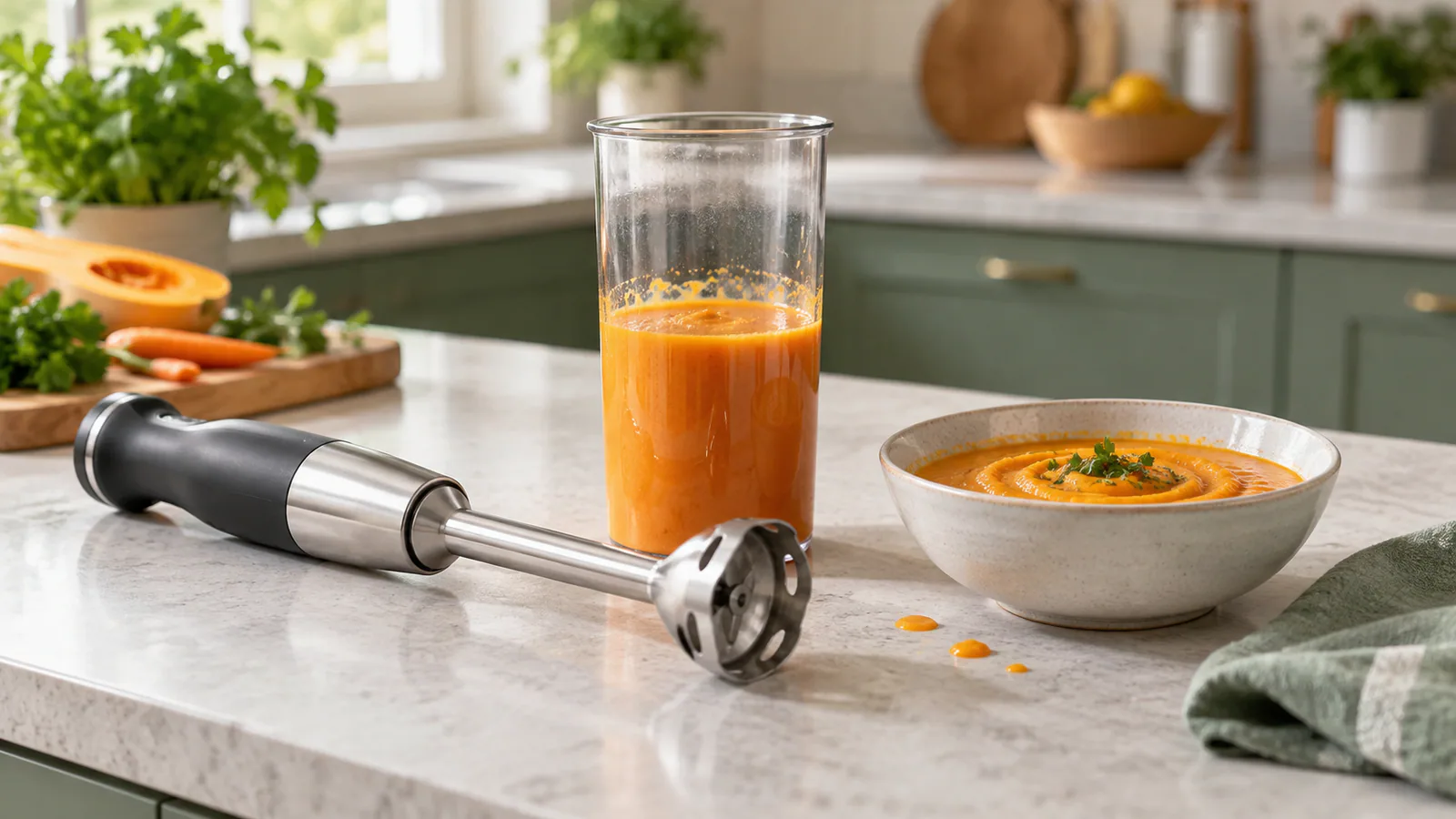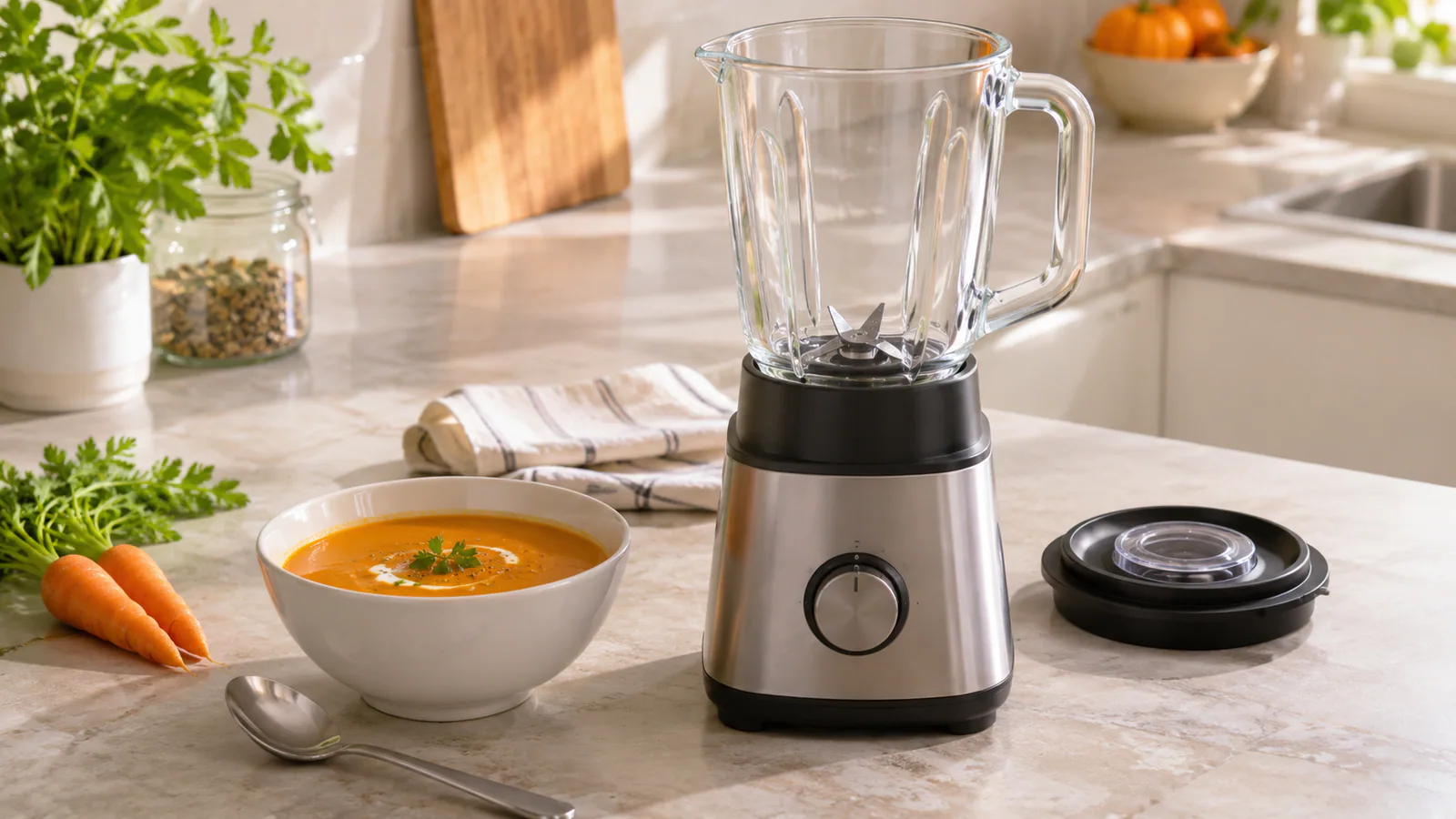
Buying a glass jug is not enough to choose a blender for hot soup. Start with the job: do you want to blend ingredients you have already cooked, or put ingredients into the appliance and have it cook dinner? Those two routines need different checks.
Decide whether you want blending or cooking
A recent soup-maker discussion makes the distinction concrete. The shopper wanted smooth and chunky soup cooked inside one jug, and selected glass and stainless-steel components. After purchase, the construction around the base prompted more questions. That account does not establish a material hazard; it shows how choosing by one visible material can leave the rest of the task unresolved.
If you normally cook vegetables in a saucepan, a blender explicitly approved for your intended soup preparation may be enough. If you want the appliance to cook the ingredients as well, check for that function in the exact model's instructions. A motor that blends vegetables is not, by itself, a cooking system.
Read the hot-ingredient rule before the capacity claim
The Ninja TB301 FAQ says not to blend hot liquids and identifies pressure buildup as a risk. That restriction belongs to this model. A different blender's soup recipe, a glass appearance or a large capacity number does not override it.
Check the instructions for the exact jug or cup you will use. A set with several attachments can have different rules for each one. If the manual excludes hot ingredients, choose another approved preparation method rather than guessing a temperature or loosening a lid to make the appliance behave like a different design.
Some machines are designed to cook soup
The opposite generalisation is also wrong: countertop blenders are not all limited to cold drinks. The Ninja HB150UK is a cooking blender with a heating element. Its published maximum is 1.4 L for hot blends and 1.7 L for cold blends. These figures illustrate why the relevant fill limit matters; they are not limits for another brand or another jug.
When comparing a soup maker, look for the recipe style you actually want. Smooth soup, chunky soup and blending already-cooked ingredients are not interchangeable promises. Read the instructions before assuming that a programme lets you add ingredients or interrupt cooking in the way you prefer.
Build a shortlist around your usual meal
Search the exact model name with “hot liquids”, “soup” and “manual”. Find an explicit permitted use, the relevant fill limit and the specified preparation steps. If you cannot establish that it supports your hot-soup routine, leave it off that shortlist even if the jug looks right.
For shoppers also comparing everyday blending options, the COSONIC blender range is a useful place to continue browsing. Keep your soup requirement alongside the drinks and meals you make most often, rather than treating the brand name or jug material as an operating instruction.
An older owner discussion about hot liquids includes people relying on previous uneventful use and suggesting workarounds. Those experiences are not permission to ignore a model's restrictions. Choose the appliance around its documented job, then use the instructions supplied with it.