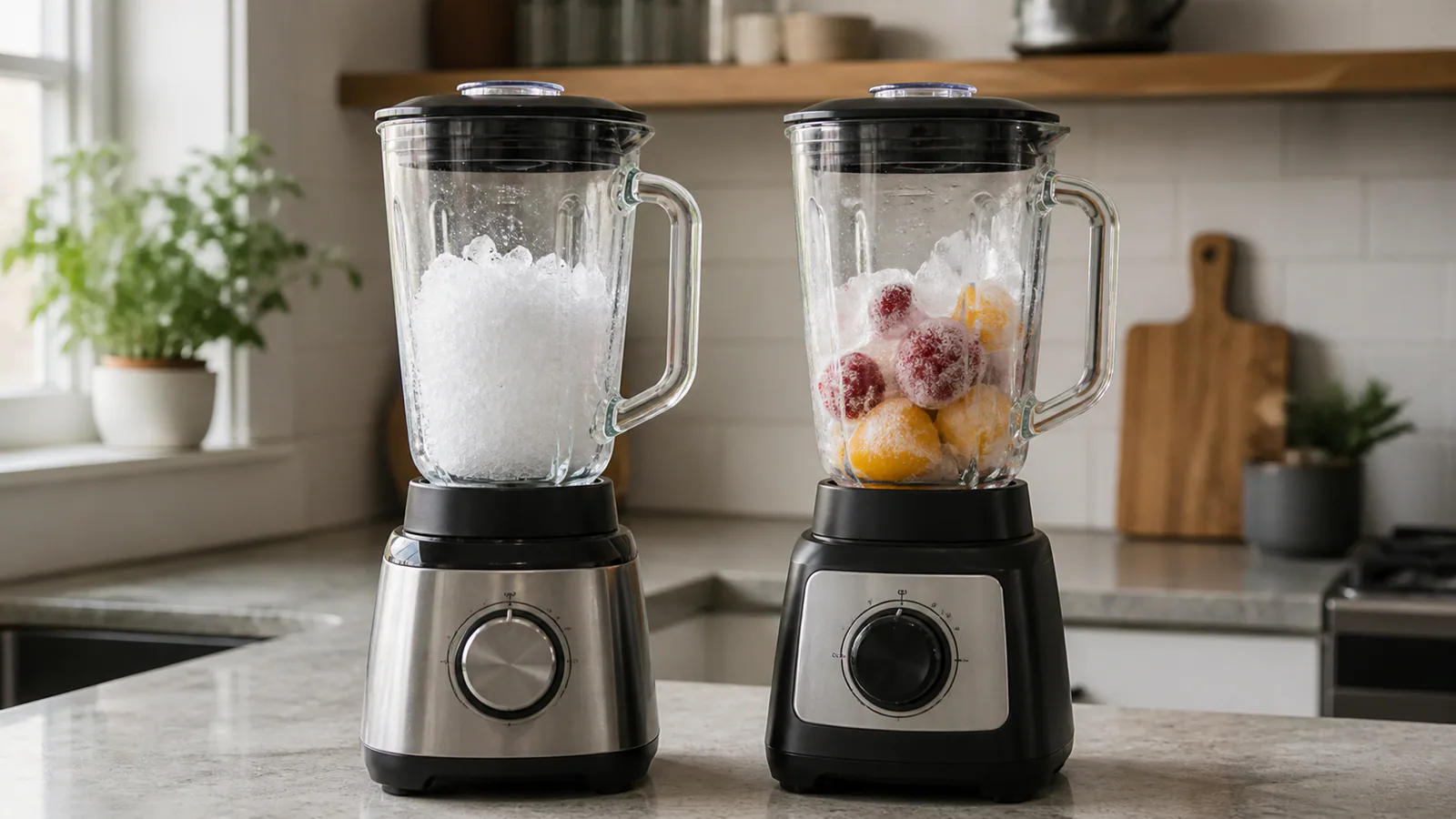
Choose the drink before choosing the machine
A banana smoothie and a glass of separated apple juice are different outcomes. A blender mixes the banana into the drink; a juicer normally separates juice from pulp. If your usual breakfast is a thick banana drink, start by comparing blending functions rather than buying a juicer and hoping every fruit will work.
The confusion appears in a first-time buyer's discussion: the buyer had a juicer arriving and wanted to know which ingredients it could not process. Replies pointed to soft-fruit texture and the manual. That is a useful purchasing question, but the comments are not a tested compatibility list.
A centrifugal juicer is not automatically a banana blender
Philips' ingredient guidance says bananas are unsuitable for its centrifugal-juicing guidance and directs the reader to a blender. Its Russian-language guidance makes the same distinction. These are two language versions from one manufacturer, not two independent tests.
The practical consequence is simple: a wider feeding tube or a bigger power number does not establish that the juicing attachment accepts bananas. Before buying, look for the exact model's ingredient instructions and the function used in its banana recipe.
Already making juice? Blend the banana into it
In a 2020 owner discussion, one participant describes putting prepared juice and a banana into an ordinary blender. That gives a concrete alternative for someone who enjoys both juice and thicker drinks: make the suitable fruit juice first, then use the blender for the banana mixture.
The same thread includes a person who reports processing bananas in a Breville juicer. Keep that contrary experience in view, but it does not identify a repeatable yield, the exact model or a manufacturer-approved recipe. Do not use it to override your appliance's instructions.
Some slow juicers have a different recipe path
Philips' support page also describes special banana recipes for its slow-juicing guidance and identifies model HR1933/34. That prevents a blanket claim that no juicer can ever process banana. It also does not mean every machine described as slow or cold press can do it.
If you specifically want that function, confirm the recipe, required ingredients and attachment for the exact model. A recipe that adds other liquid or makes a thick drink is not proof of clear banana juice or a particular extraction yield.
Buying for both drinks? Check the included jars
For a household making both juice and smoothies, the relevant comparison is whether the appliance includes both functions. The COSONIC CSJ-1100 public configuration lists a separate glass blender jar alongside a juice jug and filter basket. That makes the attachment list useful when comparing combined appliances; it is not a claim that the juicing attachment extracts banana juice. Check the locally supplied configuration and instructions.
Before choosing, name the drink you make most often. For creamy banana drinks, compare blenders. For separated fruit juice as well, compare the juicing function and whether a blender jar is included. If you already own a suitable blender, you may only need the separate juicer. Buy the missing function, rather than duplicating equipment because a listing calls it multifunctional.