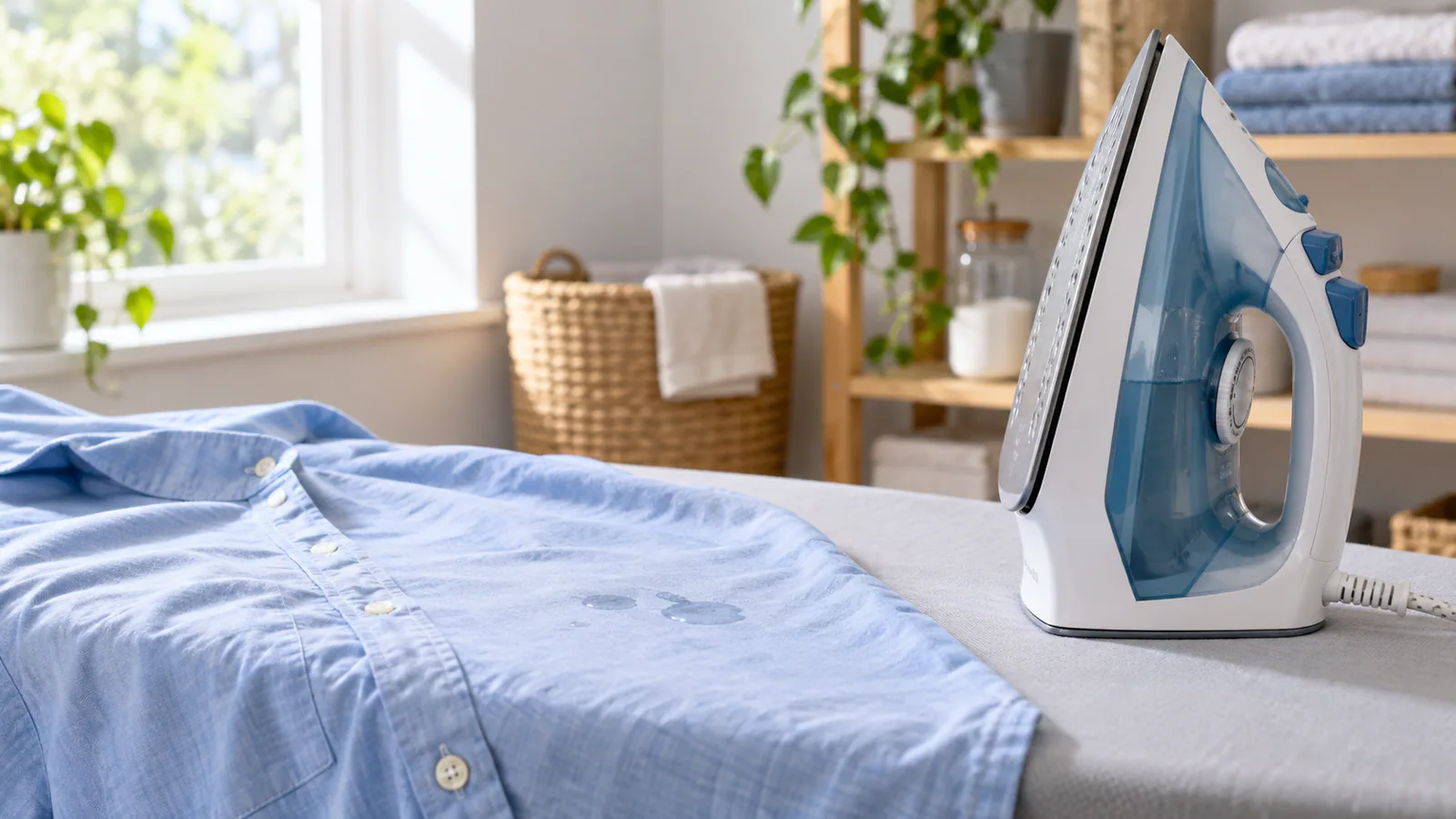
Wet clothes are a reason to check, not a diagnosis
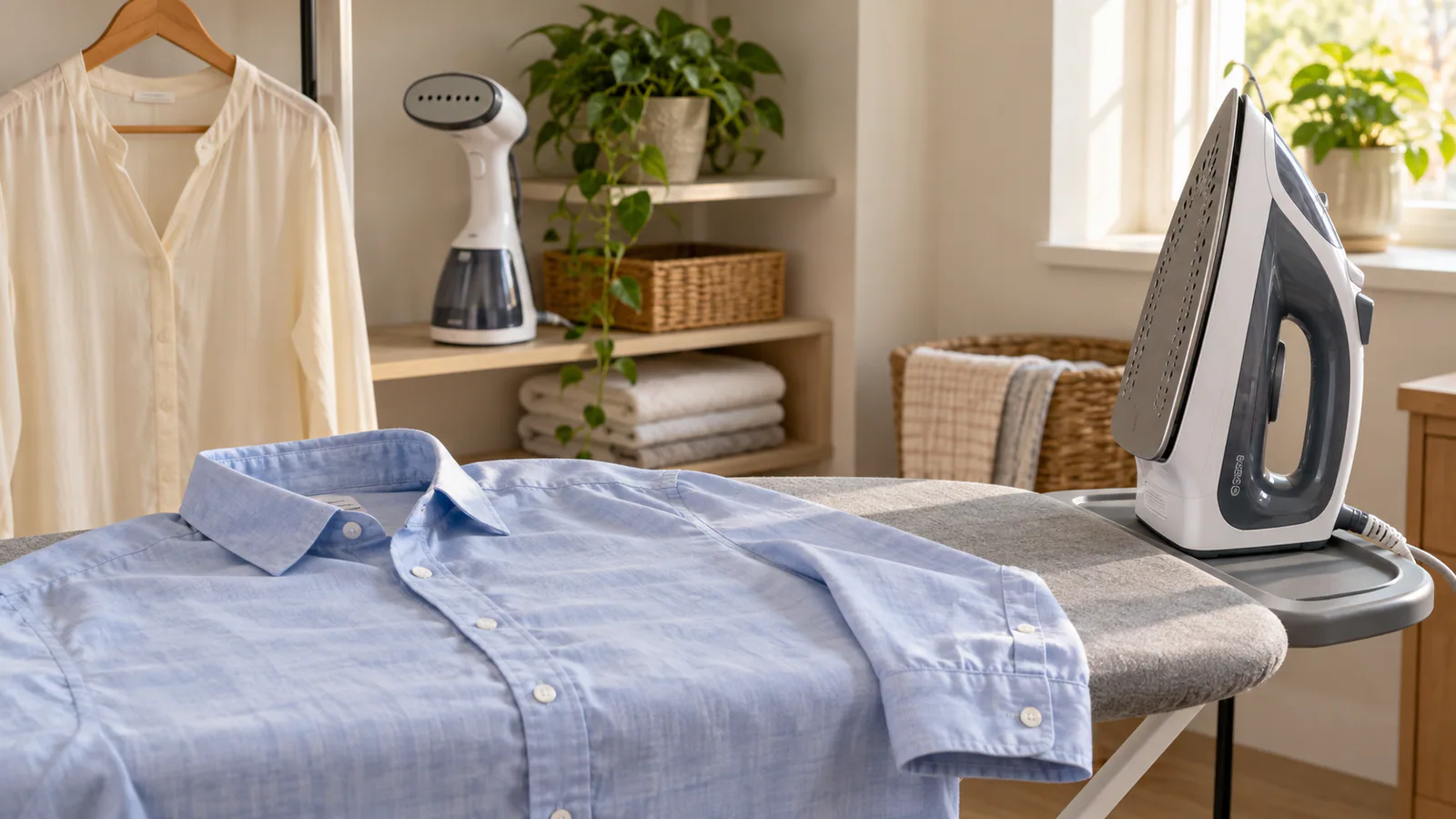
If you press a shirt and leave a wet patch, it is tempting to buy another iron. In a sewing discussion, owners described giving up on steam and using a separate spray bottle. Others were unsure which control released steam and which sprayed water. The problem had changed how they used the appliance.
Those experiences do not prove that every spitting iron is faulty. But neither should every complaint be dismissed as poor technique: an Oliso owner said the temperature was already high enough. That discussion did not establish the cause or confirm a successful fix.
Check the steam setting before increasing the heat
For a conventional iron with a temperature dial, the chosen heat setting and steam setting must work together. Philips support identifies low temperature and closely repeated steam boosts as possible causes of clear droplets. Its page names DST3031/20, so its dial markings and waiting times must not be copied to another model.
Read your own manual for the steam range and ready signal. Let the iron reach that condition before requesting steam, and leave the stated pause between bursts. A temperature indicator and an automatic shut-off indicator can mean different things; identify the correct light rather than assuming any light going out means ready.
Keep the garment's care label as the limit. If the fabric needs a lower temperature than the iron permits for steam, choose a permitted dry-ironing setting instead. Tefal's FV4041G0 guidance explicitly describes dry ironing with the steam control off and the temperature set for the fabric. That is a model example, not a claim that every appliance can be operated the same way.
Find where the water actually comes from
Water appearing below the ironing board can have a different explanation from water coming through the iron. Philips also describes steam condensing in the board cover. Check whether the cover is already wet before concluding that the iron's tank is leaking.
Brown water or particles need a different check from clear droplets. Follow the model's cleaning and water instructions; do not add fragrance or a household descaler unless those instructions explicitly allow it. Water recommendations vary, so advice to use only distilled water is not a universal solution.
There is also a clear stopping point. In a separate owner report, water reportedly came from a housing opening while the soleplate stayed dry. That is not evidence of a steam-setting problem. If water comes from the body, there is visible damage, or uncontrolled leaking continues after the instructed checks, stop using the iron and seek model-specific support. Do not open the casing or keep raising the heat to compensate.
When shopping, compare controls you can understand
If replacement is needed, begin with your usual clothes. In product photos and the manual, look for an identifiable dry setting, understandable steam adjustment and a clear ready signal. Search the exact model with terms such as “leaks after warm-up” or “steam control”; read what the owner was doing and whether the issue was resolved. A complaint without that context cannot rank one model against another.
For example, the public COSONIC CSI-7202 configuration lists adjustable steam and temperature control, a temperature indicator light and a water-spray function. Those are relevant controls to compare when you want to distinguish spraying, steaming and heat adjustment. Use the exact model instructions and locally supplied configuration; the feature list is not a leak-free performance test.
Shortlist from the current iron range by the controls and fabric settings you will use. If a listing promises powerful steam but does not explain how to use it for your clothes, find the model manual before choosing.